
Google Ads agency Melbourne

Google Ads agency for Melbourne businesses that want measurable pipeline, not just impressions.

Melbourne rewards advertisers who understand where the city changes character. The inner ring, the middle suburbs and the outer growth corridors buy different things, at different price points, through different conversion paths. Layer on a climate that swings demand for trades and home services week to week, and a metro-wide campaign with a flat budget starts looking like a blunt instrument. WIF builds Melbourne accounts that account for both.

What WIF checks first

Melbourne's inner and outer suburbs are effectively different markets sharing a name.

Campaigns that treat the whole metro as one audience end up writing copy that fits nobody in particular and setting budgets that ignore how sharply demand moves with the weather. WIF separates the geography and the seasonality before touching bidding. This page sits under the national Google Ads Australia overview.

Inner versus outer

Housing stock and density change what people search for.

The inner suburbs skew toward apartments, terraces and period homes, with work that is often access-constrained, heritage-sensitive and smaller in scope. The outer growth corridors are dominated by newer detached housing on larger blocks, where the same trade category means different jobs at different values. A single ad group serving both produces copy that fits neither. WIF segments where the job type genuinely differs and keeps things combined where it does not.
Transport geography

The tram network shapes the inner city; the outer suburbs run on arterials.

Inner Melbourne's tram corridors, one-way streets, clearway restrictions and scarce parking make short trips slower and more awkward than distance suggests, which matters for any business sending a vehicle. Beyond the tram network the metro opens onto arterial roads and freeways where a longer trip can be faster. A radius drawn evenly across both produces a service area that is too generous inside and too conservative outside. WIF sets the boundary by travel time and by where jobs are actually worth taking.

Weather-driven demand

Melbourne's climate volatility moves trade and home-services demand week to week.

Heating, cooling, roofing, plumbing, gutters and outdoor work all respond to weather, and Melbourne's tendency to swing between conditions in a short span makes those swings arrive with little notice. A cold snap or a heavy rain event can lift urgent searches abruptly, while a mild stretch flattens them. Fixed daily budgets either cap the account exactly when demand appears or waste money when it does not. WIF plans for the pattern with budget headroom and seasonal expectations set in advance.

Vertical mix

Melbourne's category mix is not Sydney's.

The city's commercial base leans noticeably toward manufacturing and trade services, education, healthcare, professional services and a large hospitality and events sector. That shapes both the B2B categories worth advertising in and the consumer ones. A keyword and messaging strategy imported from another Australian metro often misses where Melbourne's actual demand and competition sit.

Search quality

Actual search terms decide whether Melbourne clicks have buyer intent.

WIF reviews the search terms report, not just keyword lists. Broad match, Performance Max and auto-applied recommendations remain the most common sources of wasted spend, particularly when a campaign spans suburbs with very different job values and the report is not being read weekly.

Tracking accuracy

Reported conversions and real sales often show different pictures.

WIF validates conversion event setup, checks that phone calls, form fills and qualified leads are tracked separately, and confirms the data reflects what actually reached the CRM. For weather-sensitive categories this matters more, because urgent demand arrives by phone and gets undercounted when calls are not tracked properly.

How the engagement works

WIF starts every Melbourne Google Ads engagement with a structured audit.

The output separates account problems from page and follow-up problems, and establishes whether the campaign's geography and budget shape match how Melbourne demand actually behaves.

  • Map the serviceable area by travel time, accounting for inner-city congestion and outer arterial access.
  • Segment inner, middle and outer suburbs where job type, value or intent genuinely differ.
  • Review the vertical and competitor set specific to Melbourne rather than assuming another metro's mix.
  • Audit search terms, match types and negative coverage across suburb segments.
  • Validate conversion events, with call tracking separated from form submissions.
  • Plan budget headroom for weather-driven demand spikes in trades and home services.
  • Establish a weekly review cadence using cost, lead quality and pipeline signals.
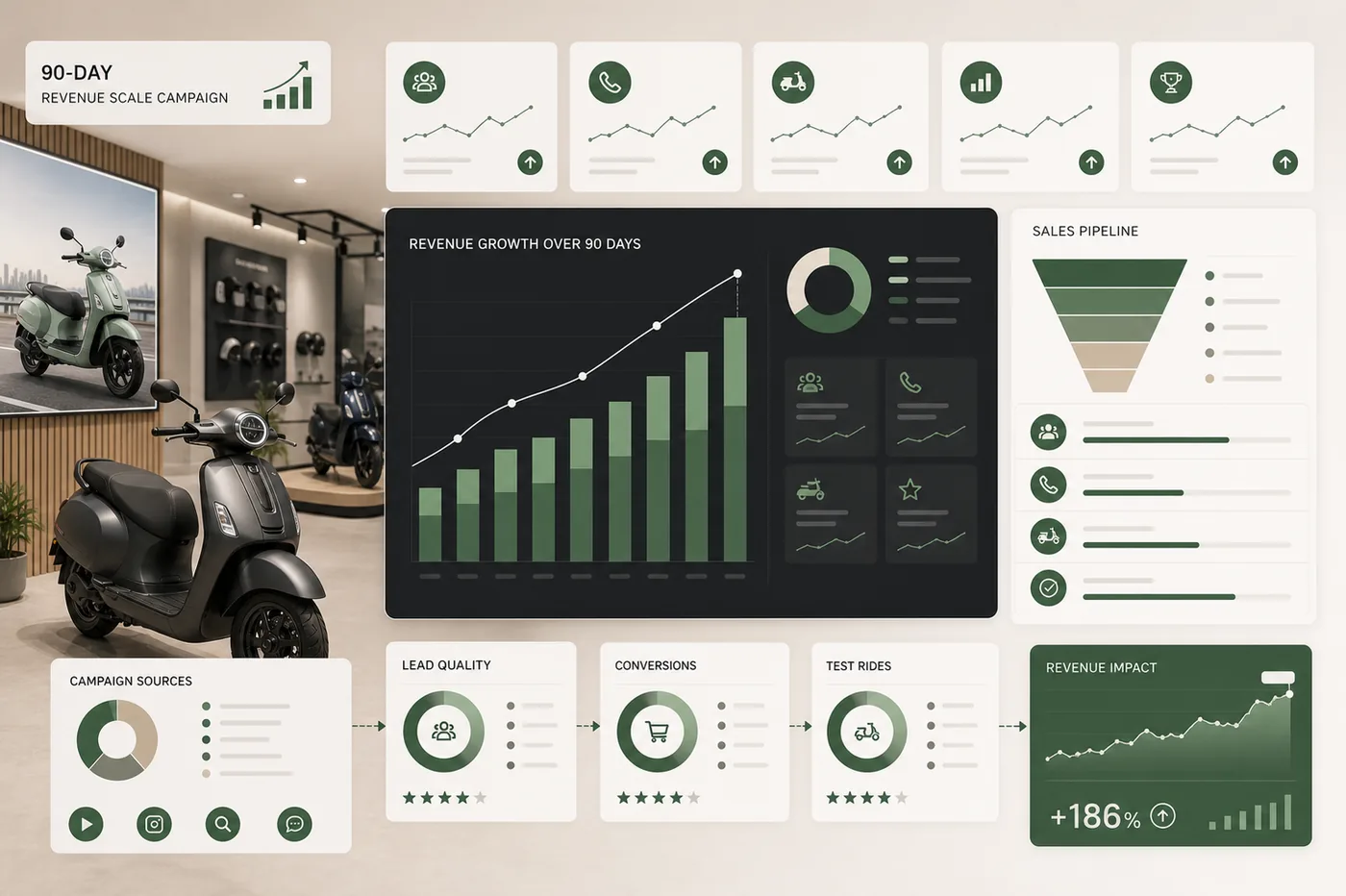
Bajaj Chetak revenue scale campaign results Revenue proof Rs. 5 Cr+ in 90 days

Directional proof

WIF reported Rs. 5 Cr+ revenue for Bajaj Chetak in 90 days. The same principles apply in Melbourne.

The result came from disciplined search campaigns, intent-aligned landing pages and AI-assisted lead qualification routing. The core system works regardless of market — offer language, competition and buyer context change, but the process stays consistent.

  • Search term discipline removed wasted spend before budget was scaled.
  • Landing pages were reviewed for message match and offer clarity before launch.
  • Lead qualification routing reduced average response time to under one hour.

FAQ

Questions Melbourne businesses ask before working with WIF on Google Ads.

Yes. WIF supports Melbourne-facing campaigns remotely with weekly reporting, search term reviews, budget movement decisions and conversion tracking validation. Review calls are scheduled to fit the Australian time zone.

Where the work genuinely differs, yes. Inner suburbs skew to apartments, terraces and period homes with access-constrained smaller jobs, while outer corridors are mostly newer detached housing with larger scopes. When job type and value diverge that much, one ad group serving both produces copy that suits neither.

For trades and home services it moves demand noticeably. Heating, cooling, roofing, plumbing and gutter work all spike with cold snaps, heat and heavy rain, and Melbourne's conditions can shift quickly. A rigid daily budget caps the account exactly when urgent demand appears, so WIF plans headroom for those periods instead of holding spend flat.

It does. Inside the tram network, clearways, one-way streets and limited parking make short trips slower than the distance implies. Beyond it, arterials and freeways make longer trips faster. An even radius across both is simultaneously too wide inside and too narrow outside, so the boundary should be set by travel time.

WIF works best with Melbourne businesses that have a clear offer, need qualified leads rather than raw volume, and are willing to share sales feedback so campaigns can be adjusted based on pipeline results, not just platform data.

WIF does not promise a timeline without reviewing the current account. The audit phase usually takes one week. Early signals around cost, lead volume and search quality typically appear within 30 days of launching a restructured campaign.

Free growth audit

Audit the Melbourne Google Ads account before committing more budget.